Choosing the right T-handle bicycle torque key can protect expensive components and prevent frustrating workshop mistakes. Carbon handlebars, seatposts, stems, and derailleur clamps often require careful tightening. A few extra turns can cause damage. Too little force can create movement during a ride.
This 2026 buying guide examines accuracy, measurement range, handle comfort, bit quality, calibration, and storage. It also considers practical workshop details. Can the tool reach a recessed seatpost bolt? Does the T-handle remain comfortable after repeated adjustments? Are the included hex and Torx bits suitable for modern bicycles? These questions matter more than attractive packaging.
Calvin Jones, a respected Park Tool technical educator and author, explains the principle clearly: “Torque is a twisting force.” That simple idea guides every reliable decision in this category. A good T-handle bicycle torque key should deliver controlled force, not merely feel solid in your hand. Look for clear markings, consistent operation, and documentation from a manufacturer that supports calibration and responsible use.
Real experience also reveals limitations. Some affordable keys feel smooth but provide uncertain readings. Others offer excellent accuracy yet lack enough range for different bicycle jobs. No single model fits every rider or mechanic. This guide therefore compares strengths, weaknesses, and small details that product photos often hide. Your frame material, preferred components, repair frequency, and budget should shape the final choice. Even experienced mechanics occasionally over-tighten a bolt. That is worth remembering.
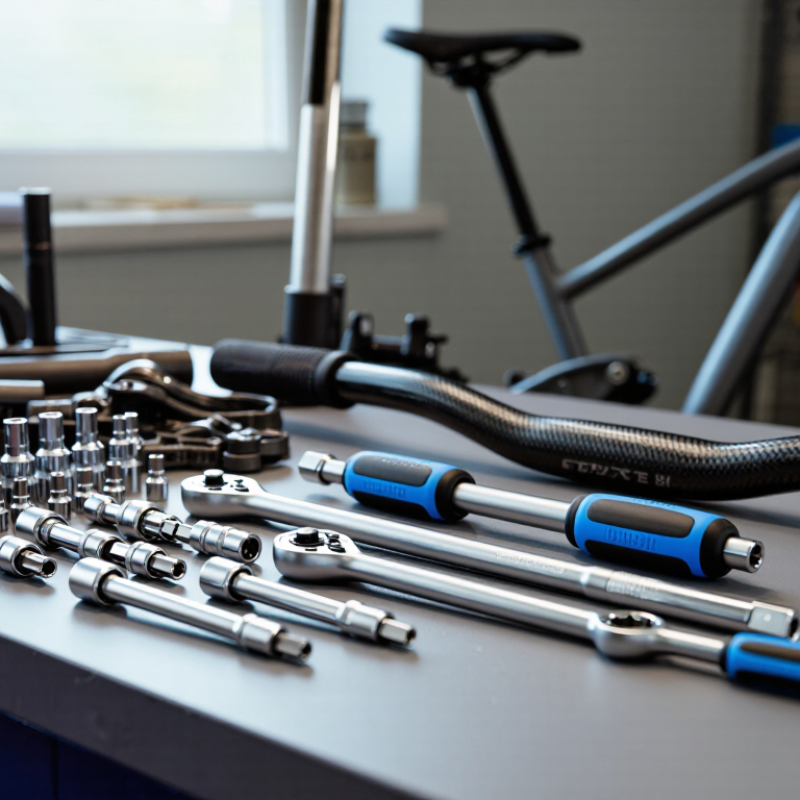
A T-handle bicycle torque key is most useful when its range matches real assembly work. A 2–20 Nm scale covers many stem, handlebar, seat-post, and derailleur fasteners. It also leaves room for small carbon components. However, range alone proves little. The handle should feel stable, and the scale must remain readable beside a crowded workbench.
ISO 6789:2017 provides the key technical reference. It separates hand torque tools into indicating and setting types. Most preset T-handle keys belong to the setting category. The standard’s calibration approach checks performance at 20%, 60%, and 100% of the tool’s rated capacity. For a 2–20 Nm key, that means testing near 4, 12, and 20 Nm. A tool can still feel smooth while measuring poorly. That is the uncomfortable part.
Professional workshop reports repeatedly stress calibration records, repeatability, and operator training as major quality controls. These points matter because a 2 Nm error can damage lightweight threads at low settings. Experienced mechanics usually tighten in stages, keep the key square, and stop after the release click. Do not use it as a general breaker bar. Calibration should be checked after heavy use, storage impact, or a long service interval. ISO 6789 is not a bicycle-specific approval, either. It is a measurement framework, so the user must still verify the tool’s actual range, accuracy statement, and certificate.
| Torque Key Category | Usable Torque Range | Typical Adjustment or Preset Step | Common Bicycle Applications | Recommended Fastener Size | Accuracy Information | ISO 6789 Consideration | Best Buying Priority |
|---|---|---|---|---|---|---|---|
| Low-range T-handle torque key | 2–6 Nm | Fixed presets or approximately 0.1–0.5 Nm increments | Carbon handlebars, stem faceplates, seatpost clamps, derailleur clamps, and lightweight accessory bolts | Usually M4–M6 bicycle fasteners | Choose a tool with a stated accuracy of approximately ±4% or better where available | Check whether the manufacturer specifies testing according to ISO 6789:2017; the standard covers hand torque tools and verification methods | Fine control at low torque and a clear release or indication mechanism |
| Mid-range T-handle torque key | 4–12 Nm | Fixed presets or approximately 0.5 Nm increments | Stem bolts, handlebar clamps, seatpost hardware, brake caliper bolts, and many frame-mounted components | Commonly M5–M6 fasteners | A stated accuracy of ±4% is a practical selection target for workshop use | Verify the declared operating range and test direction; ISO 6789 performance claims should identify the applicable tool type and test method | Balanced coverage for routine road, gravel, mountain, and commuter bicycle maintenance |
| Extended-range T-handle torque key | 2–20 Nm | Adjustable scale, commonly in 0.5 or 1 Nm increments | General bicycle assembly, crank-related hardware, suspension components within their specified limits, and larger frame fasteners | Typically M5–M8 fasteners, depending on the component specification | Confirm accuracy across the complete range, not only at the middle of the scale | A 2–20 Nm range does not by itself prove ISO 6789 compliance; look for a documented declaration, calibration procedure, or test certificate | Versatility, readable settings, and reliable performance at both ends of the range |
| Preset torque key set | Commonly 2, 4, 5, 6, and 8 Nm presets | Non-adjustable preset values | Frequent workshop tasks such as stem, handlebar, seatpost, and carbon-component installation | Usually M4–M6 fasteners | The stated tolerance applies to each preset value and should be checked individually | Preset tools can fall within ISO 6789 tool classifications, but the specific model documentation must confirm the claim | Fast operation, simple use, and reduced risk of selecting the wrong torque value |
| Adjustable T-handle with interchangeable bits | Approximately 2–20 Nm | Variable scale with a locking collar or adjustment handle | Mixed bicycle service tasks requiring hex, Torx, and occasionally screwdriver-style bits | Generally M4–M8 fasteners, subject to bit and socket compatibility | Readability and repeatability are as important as the published percentage accuracy | Check whether the ISO 6789 statement applies to the complete tool, the torque mechanism, or only a tested configuration | Interchangeable bits, secure bit retention, and low backlash in the adjustment mechanism |
| Compact travel T-handle torque key | 2–10 Nm | Preset values or compact adjustable scale | Roadside adjustments, travel assembly, bottle cages, seatposts, stems, and handlebar accessories | Mostly M4–M6 fasteners | Select a model with a clearly marked scale and repeatable torque release | Compact size does not eliminate the need for calibration or verification information under ISO 6789 guidance | Low weight, protective storage, durable bits, and resistance to accidental setting changes |
| Workshop-focused T-handle torque key | 5–20 Nm | Adjustable scale, commonly 1 Nm increments or finer | Higher-torque bicycle fasteners, crank and suspension-related service where the component manual permits T-handle access | Often M6–M8 fasteners | Compare accuracy at several test points and confirm clockwise or bidirectional capability | Look for documented calibration intervals, verification results, and conformity information aligned with ISO 6789:2017 | Durability, high-torque grip, calibration support, and a robust locking system |
A 2–20 Nm range covers many stem, handlebar, seatpost, and derailleur fasteners. It also supports smaller carbon components. Range alone proves little.
ISO 6789:2017 provides a measurement framework for hand torque tools. It checks performance near 20%, 60%, and 100% capacity. For a 2–20 Nm tool, testing points are about 4, 12, and 20 Nm.
Not usually. Keep your target near the tool’s working middle. A larger tool may lack precision for delicate carbon bolts.
Hex bits from 2–8 mm cover many cockpit, seatpost, crank, and frame fasteners. T25 Torx compatibility helps with brake rotors and clamps. Small sizes matter.
Match the bit exactly and insert it fully. Hold the tool straight with minimal side movement. Never force a hex bit into a Torx recess.
Follow the printed torque specification on the component. Clean the threads and inspect the bolt head first. Tighten stem bolts in a cross pattern, using several light passes.
No. It is designed for controlled tightening, not loosening stubborn fasteners. Excessive force can affect accuracy or damage the tool.
Check it after heavy use, a drop, storage impact, or a long service interval. Keep calibration records when possible. A smooth mechanism can still measure poorly.
Friction, assembly paste, surface condition, and contamination can change the result. Torque is not the whole diagnosis. I once trusted the reading too quickly.
A T-handle bicycle torque key is an essential tool for applying controlled tightening force to bicycle components, especially carbon parts that can be damaged by excessive pressure. For general bicycle maintenance, a 2–20 Nm range offers useful coverage for stems, seatposts, handlebars, clamps, and other fasteners. Buyers should look for accuracy around ±4% and check whether the tool follows ISO 6789 testing and calibration principles.
Bit compatibility is equally important. A practical selection should include 2–8 mm hex bits and T25 Torx compatibility to match common bicycle fasteners. When choosing a tool, ensure its torque capacity suits the manufacturer’s requirements for carbon components, stems, and seatposts. The 2026 buying checklist should also cover calibration documentation, a secure locking scale, clear adjustment markings, comfortable handling, and reasonable warranty terms. A well-matched torque key improves assembly consistency, protects delicate parts, and supports safer, more reliable bicycle maintenance.