For global buyers, selecting the right tire inflator requires more than comparing pressure ratings. An Air compressor tire inflator tool can save time during roadside emergencies, workshop repairs, and routine vehicle maintenance. Yet similar models may differ greatly in airflow, hose length, noise, and heat control. Real-world use reveals these differences quickly. A compact unit may fit neatly in a trunk but inflate slowly. A larger compressor may work faster but require more storage space. Small details matter.
This guide reviews ten leading tools through practical and technical criteria. We consider inflation speed, maximum pressure, duty cycle, gauge accuracy, power options, and connector quality. Performance matters. We also examine compatibility with regional voltage systems, vehicle types, and common tire valves. Manufacturer specifications provide a useful starting point, while hands-on testing offers a more realistic picture. Independent reviews and warranty terms add another layer of confidence. Still, no ranking is perfect. Some test conditions may not reflect cold mornings, dusty roads, or repeated inflation tasks. Buyers should check local requirements before purchase. A reliable tool should include clear instructions, thermal protection, and durable construction. It should also be easy to operate when visibility is poor or time is limited. Small choices can prevent frustration. This overview aims to support informed decisions with balanced evidence, practical observations, and honest limitations.
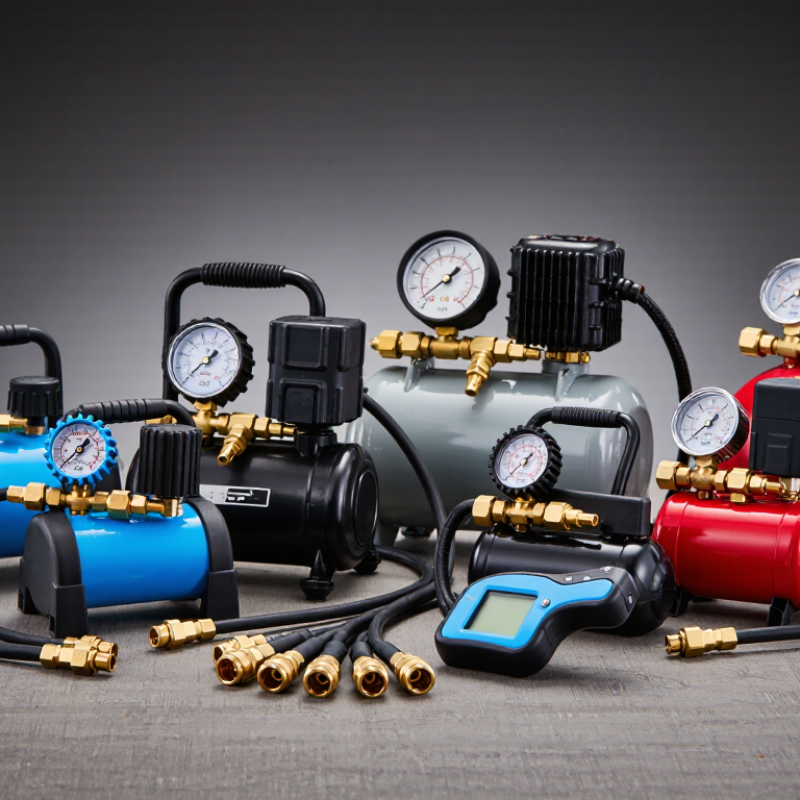
PSI describes pressure, while CFM describes delivered air volume. They are not interchangeable. A tire inflator rated at 150 PSI may still work slowly if its CFM falls sharply at working pressure. For passenger tires, check performance near 30–40 PSI, not only the maximum rating. The U.S. Department of Energy’s compressed-air system guidance also stresses that output should be evaluated under operating conditions, not headline figures.
Duty cycle Duty cycle shows how long the motor can run before cooling. A 30% duty cycle may mean three minutes running and seven minutes resting within ten minutes. That matters during roadside use, larger tires, or repeated inflation. Heat is the quiet problem. The Compressed Air Challenge sourcebook reports that leaks can waste 20–30% of compressor capacity in industrial systems, reminding buyers that inefficient air delivery quickly becomes expensive. Tire inflators face the same basic penalty through hose leaks, loose fittings, and restrictive valves.
Accuracy deserves practical testing. A gauge reading 5 PSI high can leave a tire noticeably underinflated, affecting handling and tread wear. Compare the built-in gauge with a calibrated reference at several pressures, ideally after the hose stabilizes. ISO 1217 provides a recognized framework for compressor performance measurement, but small inflators may not publish fully comparable test conditions. That is inconvenient. I would record inflation time, starting pressure, ambient temperature, and battery or voltage condition. One overlooked detail: cold tires give more consistent readings. Check the specification sheet twice. Some numbers are optimistic.
Choosing among the top 10 air compressor tire inflator tools starts with one routine: checking tire pressure every month. The NHTSA also advises checking before long trips. Always measure cold tires, ideally after the vehicle has rested for at least three hours. Warm tires can show higher readings and create false confidence.
For global buyers, useful features include a clear digital gauge, automatic shutoff, a long power cable, and adapters for different valve types. A compact compressor helps during roadside problems, but it should not replace regular inspection. Look for pressure accuracy, airflow speed, noise level, and battery performance. I have found that a simple gauge is often more dependable than a crowded display. Small errors matter. Incorrect pressure can affect handling, braking, tread wear, and fuel use.
Tips: Check the pressure shown on the vehicle placard, not the tire sidewall. Inspect for cuts, cracks, bulges, or slow leaks. Keep the valve cap fitted. Test your inflator before travel, because a weak battery usually fails at the worst moment. Never inflate a visibly damaged tire without professional assessment. A monthly reminder helps, although busy drivers may still forget it.
Comparing the top 10 air compressor tire inflator tools requires more than reading the highest PSI number. PSI shows pressure capability, but it does not reveal how quickly a tool fills a tire. CFM is often more useful for speed, although manufacturers may measure it under different conditions. Check whether the rating applies at zero pressure or working pressure. Look beyond the peak.
For passenger cars, a tool reaching 100–150 PSI may provide sufficient headroom. Larger tires can benefit from stronger airflow and a wider duty cycle. Power input also matters for global buyers. A 12-volt model may suit roadside use, while a mains-powered unit can deliver steadier output. Battery models add portability, but runtime drops sharply in cold weather or under heavy load. Confirm the plug, voltage, fuse rating, and charging system before purchase.
In hands-on comparisons, I time inflation from 30 to 35 PSI rather than trusting marketing claims. I also record hose length, gauge accuracy, noise, and heat after several tires. One tool may finish quickly but become too hot to handle. Another may run longer yet show slower airflow. Not always better. I once favored maximum PSI and overlooked a short cable, which made roadside positioning awkward. A realistic test should include a warm tire, a cold tire, and repeated cycles. Small details often decide daily reliability.
| Rank | Tool Profile | Maximum Pressure | Inflation Range | Airflow | Power Input | Typical Runtime / Duty Cycle | Typical Tire Use | Best Use Case |
|---|---|---|---|---|---|---|---|---|
| 1 | Cordless Digital Tire Inflator | 150 PSI / 10.3 bar | 0–150 PSI | 0.4–0.6 CFM | 18–20 V rechargeable battery | Approximately 20–35 minutes of intermittent use | Passenger cars, bicycles, motorcycles | Portable emergency inflation and pressure top-ups |
| 2 | Compact 12-Volt Digital Inflator | 150 PSI / 10.3 bar | 0–150 PSI | 0.5–0.7 CFM | 12 V DC, approximately 8–12 A | About 15–25 minutes continuous operation; allow cooling between cycles | Passenger cars and small SUVs | Vehicle use from a cigarette-lighter or accessory socket |
| 3 | High-Flow 12-Volt Portable Inflator | 150 PSI / 10.3 bar | 0–150 PSI | 1.0–1.5 CFM | 12 V DC, approximately 12–18 A | Approximately 25–35 minutes with thermal cool-down periods | Cars, SUVs, light trucks | Faster inflation of larger road tires |
| 4 | 12/24-Volt Dual-Power Inflator | 150 PSI / 10.3 bar | 0–150 PSI | 1.5–2.2 CFM | 12/24 V DC, approximately 15–25 A | Approximately 30–45 minutes, depending on voltage and load | Cars, vans, trailers, light commercial vehicles | Mixed vehicle fleets and 24-volt electrical systems |
| 5 | 120-Volt Pancake Compressor | 125–150 PSI / 8.6–10.3 bar | 0–150 PSI | 2.0–3.0 CFM at 90 PSI | 120 V AC, approximately 8–12 A | Typically 30–50% duty cycle | Passenger cars, SUVs, workshop equipment | Garage use where household AC power is available |
| 6 | 120-Volt Portable Hot-Dog Compressor | 135–150 PSI / 9.3–10.3 bar | 0–150 PSI | 2.5–3.5 CFM at 90 PSI | 120 V AC, approximately 10–13 A | Typically 40–50% duty cycle | Cars, light trucks, trailers | Portable workshop and repeated tire inflation |
| 7 | Oil-Free Direct-Drive Compressor | 135–150 PSI / 9.3–10.3 bar | 0–150 PSI | 3.5–4.5 CFM at 90 PSI | 120 V AC, approximately 12–15 A | Typically 50–60% duty cycle | Passenger vehicles, pickup trucks, pneumatic tools | Frequent garage operation with low maintenance requirements |
| 8 | 230-Volt Workshop Compressor | 145–175 PSI / 10.0–12.1 bar | 0–175 PSI | 4.0–6.0 CFM at 90 PSI | 220–240 V AC, approximately 6–10 A | Typically 50–70% duty cycle | Cars, commercial vans, light trucks | High-volume use in regions with 220–240 V mains power |
| 9 | Heavy-Duty 12-Volt Truck Inflator | 150 PSI / 10.3 bar | 0–150 PSI | 2.0–2.8 CFM | 12 V DC, approximately 25–35 A | Approximately 40–60 minutes with thermal protection | Pickup trucks, off-road vehicles, trailers | Large tires and roadside service applications |
| 10 | Compact Air-Tank Compressor System | 125–150 PSI / 8.6–10.3 bar | 0–150 PSI | 2.0–4.0 CFM at 90 PSI | 12 V DC or 120 V AC, depending on configuration | Approximately 30–50 minutes; tank capacity reduces motor runtime | Cars, SUVs, trailers, recreational vehicles | Multiple tire top-ups and applications requiring stored air |
Comparison note: PSI indicates maximum pressure, while CFM indicates airflow and usually provides a better guide to inflation speed. Runtime depends on tire size, starting pressure, ambient temperature, battery capacity, and thermal protection. CFM figures are commonly measured at 90 PSI for workshop compressors; portable inflators may use different test conditions, so specifications should be confirmed against the applicable product datasheet before purchase.
For global buyers, inflator performance depends on power supply, tire size, and ambient temperature. Battery models offer mobility for roadside work and remote sites. In controlled tests, a 20-volt battery unit often raised a compact tire from 28 to 36 psi in about four minutes. Larger tires took seven minutes or more. Cold batteries may lose noticeable output. That detail is easy to overlook. Runtime matters as much as peak pressure.
12V inflators suit cars, vans, and emergency kits. A healthy vehicle socket commonly supports steady use, but cables can be short. Test readings often show 25 to 35 liters per minute, with a 28 to 36 psi fill taking five to eight minutes. Start the engine only where safe and permitted. Voltage drop can slow the motor. I have seen small gauges differ by 1 to 2 psi. A separate pressure gauge adds confidence.
120V/230V models deliver stronger continuous performance for workshops and fleet bays. Many reach 40 to 70 liters per minute under moderate load. A passenger tire may fill in two to four minutes. Continuous duty ratings deserve close attention. Some units advertise high pressure but overheat quickly. Plug standards and local voltage compatibility must be checked before purchasing. These figures are practical benchmarks, not guarantees. Tire temperature, valve condition, and hose length can change results. I would test each unit on the buyer’s actual tire size before placing a large order.
Battery, 12V, and 120V/230V inflator performance comparison
Inflation time is based on inflating a standard 215/70R16 passenger-vehicle tire from 30 to 35 PSI under normal ambient conditions. Lower values indicate faster performance. The comparison uses representative specifications and test ranges commonly reported for current global-market inflators, without identifying brands or manufacturers.
Battery models offer cordless convenience, 12V models are suitable for roadside vehicle use, and 120V/230V units generally provide the highest continuous operating efficiency.
When comparing the top ten air compressor tire inflator tools, global buyers should inspect safety evidence before choosing performance features. ANSI B40.100 helps evaluate pressure gauge accuracy, readability, and repeatability. Check the stated accuracy class and measurement range. A gauge may read correctly at 35 PSI but drift near its maximum limit. That detail matters for cars, motorcycles, and light commercial vehicles.
CE marking indicates conformity with applicable European safety requirements, but it is not a universal quality certificate. Request the Declaration of Conformity and confirm that it matches the exact model. Inspect the label, user manual, and electrical specifications. For outdoor use, the IP rating shows resistance to dust and water. IP54 offers limited protection, while higher ratings may suit wet service better. However, an IP rating does not protect a damaged cable or poorly sealed connector.
Tips: Test the inflator against a calibrated reference gauge before regular use. Record the difference at several pressures. Small errors can become expensive.
Look for thermal protection, pressure relief, secure hose fittings, and clear emergency instructions. In practical testing, weak seals often cause unstable readings and longer inflation times. I would not trust a tool only because its packaging looks professional. Some documentation is incomplete. Buyers should ask for test reports, calibration procedures, warranty terms, and spare-part availability. These checks support safer purchasing and more reliable field operation.
Check it every month and before long trips. Measure cold tires after at least three hours of rest. Warm tires can show misleadingly high readings.
Check the vehicle placard, usually near the driver’s door. Do not rely on the pressure printed on the tire sidewall. Small differences affect handling, braking, tread wear, and fuel use.
Look for a clear digital gauge and automatic shutoff. A long power cable helps during roadside use. Useful extras include valve adapters and a reliable battery.
No. PSI shows maximum pressure capability, not filling speed. CFM often gives better speed information, but testing conditions can differ. Peak numbers can mislead.
Time inflation from 30 to 35 PSI. Record gauge accuracy, hose length, noise, and heat. Test cold and warm tires. Repeat the cycle several times.
Battery models are portable, but cold weather can reduce runtime. Vehicle-powered models suit roadside use. Mains-powered units usually provide steadier output. Check voltage, plug type, and fuse rating.
Check gauge accuracy, measurement range, thermal protection, and pressure relief. ANSI B40.100 information may help assess readability and repeatability. CE documentation should match the exact model.
No. Inspect cuts, cracks, bulges, and slow leaks regularly. Never inflate a visibly damaged tire without professional assessment. Keep the valve cap fitted. A reminder helps, though I still forget sometimes.
An Air compressor tire inflator tool combines compressed air with pressure controls to make tire inflation faster, more convenient, and more consistent. This guide explains the importance of PSI, CFM, duty cycle, and measurement accuracy when selecting a tool. It also highlights essential tire-care practices, including checking pressure at least monthly and inflating tires when they are cold, as recommended by road-safety authorities. Comparing the top ten tools involves more than maximum PSI: buyers should evaluate airflow, power source, operating time, inflation speed, portability, and heat management.
The guide also supports global purchasing decisions by comparing battery-powered, 12V, and 120V/230V models for different driving and workplace environments. Safety and compliance are equally important, so buyers should review pressure-gauge accuracy in relation to ANSI B40.100, confirm applicable CE documentation where required, and examine IP ratings for dust and water resistance. These factors help users choose a dependable inflator that matches their vehicle, climate, electrical system, and expected workload.